
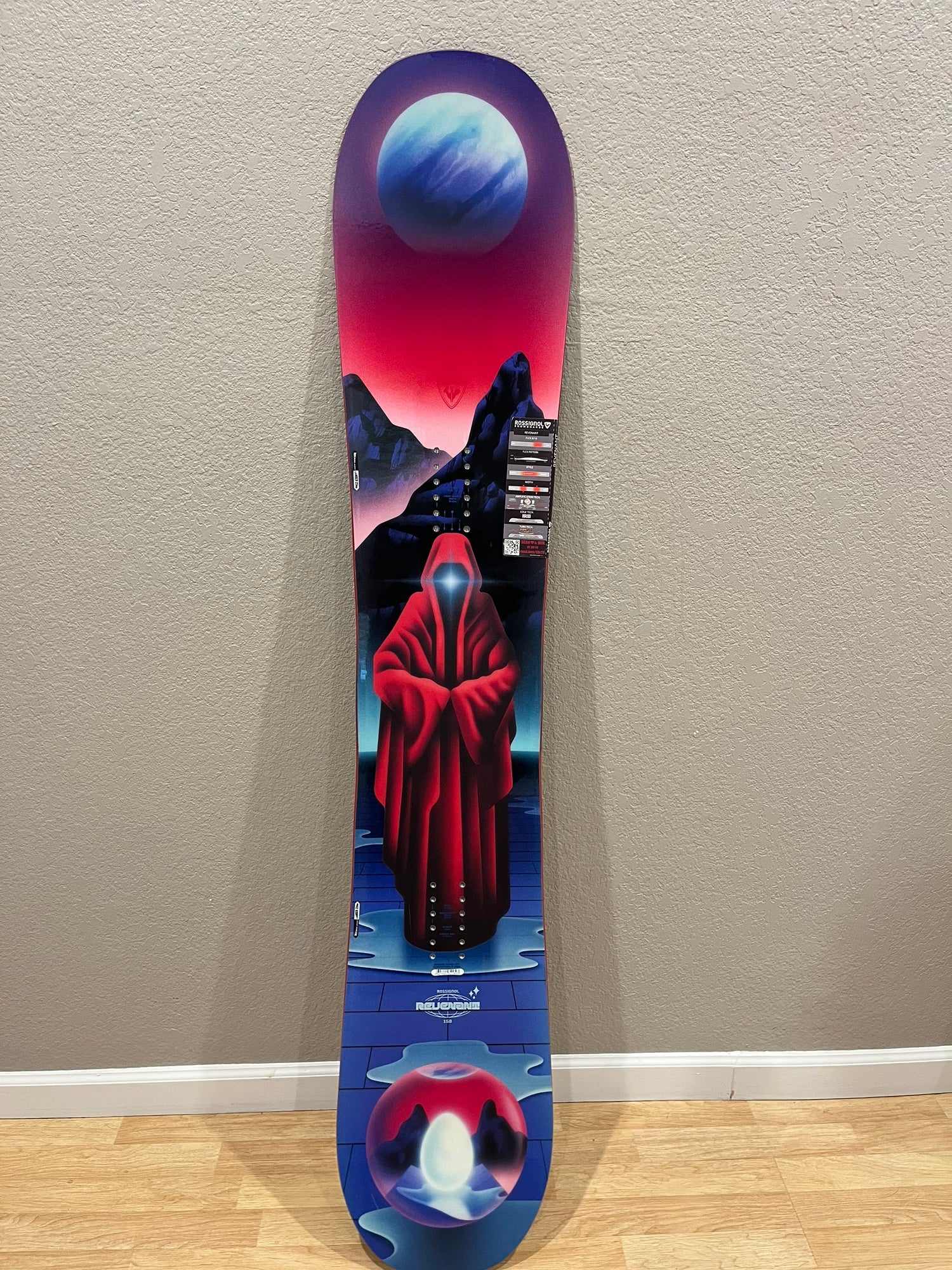
Rossignol Revenant Wide - Freeride-focused wide snowboard review
A directional freeride board built for bigger-boot riders who want float, edge hold and stability on steep lines. The Revenant Wide balances damp, surfy nose behavior and snappy edge-to-edge performance. Here is how it rides, who should consider it, setup tips, strengths, tradeoffs and care.
Overview
The Rossignol Revenant Wide is Rossignol's freeride option in a wide platform designed for riders who need more surface and a wider waist to avoid toe and heel drag. It aims to combine float in soft snow with predictable carving on firm snow. Exact layups and tech features vary by model year and trim, but the core idea remains consistent: a directional shape with a surfy, tapered nose and a stable, snappy tail for high-speed control and float. This review covers what to expect from the wide version, who it suits, setup guidance and the practical tradeoffs to consider.
Who it's for
The Revenant Wide is aimed at intermediate to advanced freeride riders who wear larger boots and need a wider board. If you spend most of your time off-piste, hunting steep faces, riding powder or linking big open turns, this board is designed to reward committed turns and confident speed. It is not a park-focused twin; it is built for directional riding and stability rather than presses and switch play. Riders who prioritize float, stability at speed and effective edge hold in variable conditions will appreciate what the Revenant Wide offers.
Design and construction
Across years the Revenant runs as a directional freeride shape with a wider waist than the regular model. The nose is typically fuller with some rocker or early rise to help flotation, while the tail is tapered and lower-profile to help the board sit into a turn and release quickly. Camber underfoot or a hybrid camber/rocker profile is common on freeride-focused Rossignol boards; exact profiles and reinforcement materials vary by year and trim.
Construction often pairs a wood core with reinforcing laminates to tune flex and responsiveness. In some model years carbon or other reinforcements are used to add snap and reduce swing weight. The wide platform increases surface area underfoot so riders with larger boots can run setback stances and avoid drag without pushing to longer lengths. Since tech details vary, check the specific model year for layup notes if a particular flex or material is critical to your choice.
Ride or use profile
The Revenant Wide rides like a freeride directional board: it wants to be pointed downhill and rewarded for committed, arcing turns. The nose design helps planing in soft snow while the underfoot camber or hybrid section gives edge hold and energy through transitions. On groomers it carves with stability; the torsional stiffness typical of this board helps it track through chop and hardpack. At speed the board feels damp and controlled rather than lively and skatey.
Edge-to-edge response leans toward predictable rather than lightning fast. That makes the Revenant Wide easy to control when linking long turns, but it does not feel like a park or freestyle board when trying to pivot quickly or spin in tight trees.
Ideal conditions
The Revenant Wide excels in soft-to-deep snow and mixed winter backcountry conditions. Its wider footprint and fuller nose make powder a strong suit. It also holds well on choppy, variable terrain and handles high-speed groomers with confidence. If most of your riding is on icy, resort groomers only, you may find a more cambered, narrower carving board more engaging. But for mixed mountain days that include powder, wind-blown snow and technical lines, the Revenant Wide is right in its element.
Setup guidance
Binding position: Set a moderate setback, typically in the range recommended by the specific board's mounting options. A setback stance helps the nose stay up in powder and keeps the board balanced for freeride lines.
Binding angles: For a directional freeride setup, try a forward-facing front angle and a milder rear angle. A common starting point is +18 front and 0 to -6 rear depending on comfort and the amount of switch riding you expect to do.
Boot and binding pairing: The Revenant Wide pairs best with medium-stiff to stiff boots and responsive freeride or all-mountain bindings. Softer boots will reduce the board's ability to transfer power for big, committed turns. Binding mount patterns and hole placements vary so consult the board's inserts and your bindings for compatibility.
Length and width: Choose a length that still puts you within the board's recommended size range while accounting for the wider waist. Riders with US men's boot sizes around 10 and above are the target for the wide platform, but exact boot-size compatibility varies by board width and length. If you are between sizes, sizing up will increase float in powder and stability at speed; sizing down will make the board nimbler but reduce float.
Strengths
- Float in softer snow thanks to a fuller nose and increased surface area in wide sizes.
- Stability at speed and predictable tracking on open faces and high-angle terrain.
- Good edge hold when a camber or hybrid profile is present underfoot.
- Durable freeride construction meant to handle mixed mountain conditions and chopped up snow.
Tradeoffs
- Heavier or stiffer-feeling than park or freestyle boards, reducing maneuverability for quick pivots or presses.
- Not optimized for switch riding; the directional shape favors forward-facing performance.
- Wider platform adds swing weight and can feel slower to initiate very tight turns, especially in trees.
- Specific flex and dampness characteristics vary by model year, so behavior can change between trims.
Care and tuning tips
Tune the edge geometry to your preferred mountain conditions. For icy days, a slightly sharper edge and a 1 to 1.5 degree base bevel with a 1 degree side edge can help maintain bite. For softer snow, a slightly dulled edge reduces catchiness in slush and crud.
Regular waxing is important for a freeride board that spends time in variable snow. Apply a hot wax every few outings if you ride in abrasive, icy conditions. Inspect the base periodically for gouges from rocks or roots; deeper cuts in the base will affect speed and durability, so have them filled professionally if needed.
Check inserts and mounting hardware after heavy impacts or big landings. The wide model's larger surface area helps with float, but any major impact to the tail or nose can loosen bindings or damage the core near inserts. Keep inserts clean and bolts torqued to the binding manufacturer's spec.
Final Call
The Rossignol Revenant Wide is a focused freeride snowboard for larger-boot riders who want a stable, float-oriented board that also holds an edge when the snow firms up. It is not a do-it-all freestyle deck; instead it delivers confidence for high-speed descents, steep lines and powder days. If you value float and damp stability over park agility, the Revenant Wide is worth considering. See the detailed model page for specs by year and size before finalizing your setup: Rossignol Revenant Wide gear detail page.