
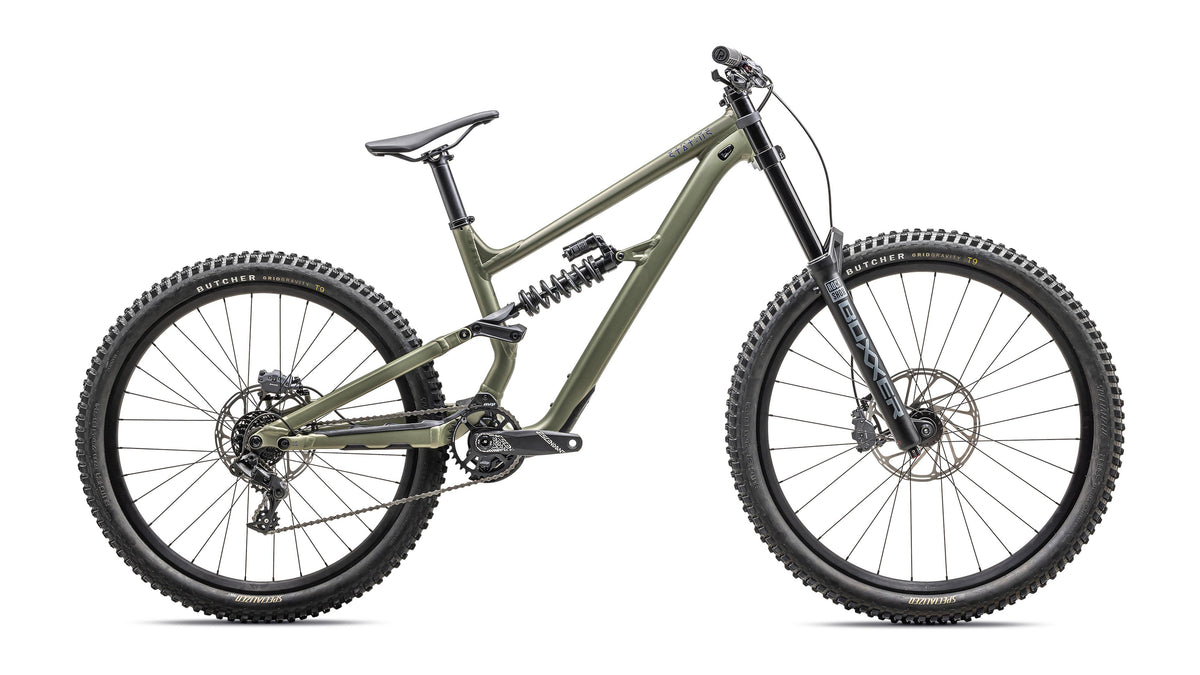
Specialized Status 2 170 DH - Gravity bike for serious downhill riders
A focused downhill machine with 170 mm of travel, built to prioritize stability, durability, and control on steep, rough tracks. This review outlines who it suits, setup tips, strengths, and tradeoffs.
Overview
The Specialized Status 2 170 DH is a gravity-oriented downhill mountain bike built to handle high speeds, big hits, and technical race tracks. The 170 in the name signals the bike's rear travel and a chassis shaped around aggressive, point-and-shoot descending rather than pedaling efficiency. Exact component mixes and frame material vary by model year and trim, but the core idea stays the same: a stout, stable platform that trades lightweight climbing performance for durability and composure at speed.
Who it's for
This bike is for riders who spend most of their time on lift-access or shuttle days, in bike parks, or riding steep, technical descents where track speed and impact management are priorities. It suits experienced to expert downhill riders who want a robust, race-capable frame that can take repeated heavy hits without feeling twitchy. It is not aimed at cross-country riders or anyone who needs a lightweight all-day trail bike.
Design and construction
Frame construction and component choices vary by year and spec. Many trims use an alloy frame built for strength and predictable flex characteristics. Some offerings in the range may step up to carbon or have revised tubing profiles. Geometry favors stability: a slack head angle, long wheelbase, and a low bottom bracket help the bike track through high-speed compressions and maintain composure under braking. The suspension layout and leverage curve differ across model years. The tune is oriented to resist bottoming on big impacts while still allowing small-stroke sensitivity when rolling over rough terrain.
Components on the Status 2 170 DH are typically heavy duty. Expect wide, reinforced rims, sturdy hubs, and tires with aggressive casings. Braking components are sized and specified to provide strong, fade-resistant stopping power. Drivetrain setups prioritize simplicity and security over lightness. Fittings for chain guides, bash guards, and strong pedals are standard considerations for the intended use.
Ride or use profile
On-descents the bike wants to go fast. Stability at speed is the headline trait. The chassis resists being deflected by roots and impacts, and the geometry lets riders hold a line through chutes and steep sections. The suspension is typically tuned for big compressions and high-speed tracking. That makes it feel confident over rock gardens and table-top landings.
Because the platform sacrifices pedaling efficiency, climbing or long transfer sections feel heavy and slow compared with trail or enduro bikes. Expect a lot of weight to haul if pedaling is required. For its intended domain, however, the tradeoff is worthwhile: the Status 2 170 DH gives a sense of control and confidence where speed and impacts dominate.
Ideal conditions
The bike performs best on steep, rough, and high-speed terrain. It excels on lift-access runs, race courses, and technical park laps with big jumps and hard landings. It also works well on shuttle days and purpose-built downhill loops. It is less suited to long climbs, tight slow-speed singletrack, or mixed all-mountain missions where nimbleness and pedaling economy are priorities.
Setup guidance
Because the bike is built for heavy-duty descending, setup should focus on suspension and control rather than saving grams. Key setup steps are:
- Suspension sag: Start with sag in the range recommended by the fork and shock manufacturers for downhill use. That often means less sag than an all-mountain setup because the bike needs to sit higher in its travel to use the mid-to-end stroke on big hits. If unsure, start with the manufacturer guidance and fine-tune for personal weight and aggressiveness.
- Compression and rebound: Run moderate compression to control big hits and to reduce harsh bottom-outs. Rebound should be tuned to return the suspension smoothly without topping out or packing down through successive impacts. Slower rebound may help on repetitive square-edge hits.
- Tire pressure: Use pressures suited to heavy impacts and high speeds. Do not go as low as in trail riding; pinch flats are more likely under DH loads. Consider reinforced casings and possibly inserts for added protection.
- Brake setup: Use pads rated for heavy use and ensure rotors are sized appropriately for sustained braking on descents. Bleed and bed-in brakes before a full day of downhill running.
- Drivetrain and chain retention: Install a robust chain guide and consider a clutch-type rear mech if the spec allows. Keep the drivetrain clean and well lubricated to prevent dropped chains under conditions of large suspension movement.
Strengths
- Built-for-speed stability: Geometry and chassis stiffness favor composure at high velocity and through rough terrain.
- Durability: Frames and components are chosen for repeatable heavy use rather than lightweight gains.
- Impact management: Suspension tune and travel handle big landings and square-edge hits with less harshness than lighter bikes.
- Confidence-inspiring: The bike’s behavior encourages aggressive lines and fast descents without feeling unsettled.
Tradeoffs
- Weight penalty: The focus on toughness and stability means a heavier bike that is inefficient for long climbs or pedaled transfers.
- Limited versatility: Optimized for downhill terrain, the bike is not an ideal choice for mixed or uphill-oriented riding.
- Component wear: Aggressive riding and high forces accelerate wear on brakes, tires, spokes, and suspension parts compared with lighter trail bikes.
- Setup sensitivity: To get the most out of the chassis, suspension must be tuned to rider weight and style. Poor setup amplifies the bike’s heavy feel without giving the expected control benefits.
Care or tuning tips
- Regular suspension service: Follow recommended service intervals for fork and shock. Downhill usage is punishing and shorter service intervals preserve performance and prevent damage.
- Check frame and link bearings: Bearing play in pivots degrades handling and wears components. Inspect and service pivots more often than on lighter bikes.
- Brake maintenance: Bleed brakes periodically and monitor pad wear. High-temperature braking on long descents can reduce pad life and rotor alignment.
- Wheel and spoke checks: Wheels take heavy impacts. Check for broken spokes, loose nipples, and rim dents. Keep a truing kit or spares on hand for quick fixes.
- Tire and rim protection: Use strong casings, consider inserts on very rocky courses, and carry replacement tubes or plugs. Inspect tires for cuts and sidewall damage after each day of hard use.
Final Call
The Specialized Status 2 170 DH is a purpose-built downhill machine for riders who prioritize stability, durability, and impact tolerance over pedaling efficiency. It is a strong choice for racers and aggressive park or shuttle riders who need a bike that can be pushed to the limits and still feel composed. If most days are spent on steep, technical descents and heavy landings, the tradeoffs make sense. For riders who demand a lighter, more versatile ride for mixed terrain, an enduro or trail bike will be a better fit.
For the official model details and spec variations, see the Specialized Status 2 170 DH gear detail page: Specialized Status 2 170 DH gear detail page.